Brian Krogsgard

What’s new in WordPress 3.7, “Basie”

basie-wordpress-3-7WordPress 3.7, “Basie”, has just been released. It’s been named in honor of Count Basie. The WordPress 3.7 development cycle is the quickest turnaround between major versions of WordPress ever.

You may not notice a whole lot of sexy new (visible) features in this version, but the release is a huge win for the platform.

WordPress 3.7 highlighted features

Let’s start with the biggest highlights for WordPress 3.7

Automatic background updates

The new WP_Automatic_Updater class is likely the most significant feature for 3.7. Automatic upgrades are now available for minor versions of core, but it can also be extended to theme and plugin updates by choice. For the best rundown of the upgrade process and exceptions, definitely read Dion Hulse’s summary of the feature and also the new Codex page on the updates and various options around the feature.

Some have been skeptical of auto updates for WordPress, but I embrace them. Really projects like Chrome and iOS are pushing this concept forward to the mainstream, and it makes sense for WordPress to able to constantly improve silently as well. People just want their CMS to work. Nobody likes doing updates; no normal people at least. So long term, even major upgrades should get auto update treatment, and I think long term that’s what will happen.

Plus, the team is being super careful to make auto upgrades work well. They are performed via SSL, and in testing, the failure rate is practically zero (in fact, I think it is zero).

A better password meter

Everybody needs better passwords. Bad passwords are created out of laziness or lack of education. A better password meter will help prevent both.

The new password meter uses Dropbox’s zxcvbn library, and it’s a significant improvement.

Improved (more relevant) search

WordPress search has sucked for a long time. It’s not been based on relevance, but on dates. According to the primary ticket for this feature, Andrew Nacin cites the following for the new order for choosing what to return in WordPress search:

  • Full sentence matches in post titles.
  • All search terms in post titles.
  • Any search terms in post titles.
  • Full sentence matches in post content.

This enhancement solves a major pain point that nearly every WordPress user with any significant amount of content has been facing for many years.

Better global support with language packs

The new “language packs” feature in WordPress 3.7 will allow for, “faster and more complete translations.” To get started making your themes and plugins be able to use these tools, check out Samuel “Otto” Wood’s guide. Language packs will be separated from WordPress core and maintained independently from core, themes, and plugins.

Language packs are also going to be updated silently along with minor updates, so that better support for more languages can be supported quicker. Translating WordPress to more languages is a clear way for the platform to continue staggering growth. As I noted in my primer on l10n and i18n, nearly a third of all WordPress installs are non-English. But even beyond that, only about 750 million people count English as a first or second language, so most of the world that could be using WordPress would struggle mightily without a translated version.

More goodness in WordPress 3.7

So, those are the dominant features of WordPress 3.7. But that’s not everything, by a long shot.
Read more

AppPresser: A foundation for using WordPress to make mobile apps

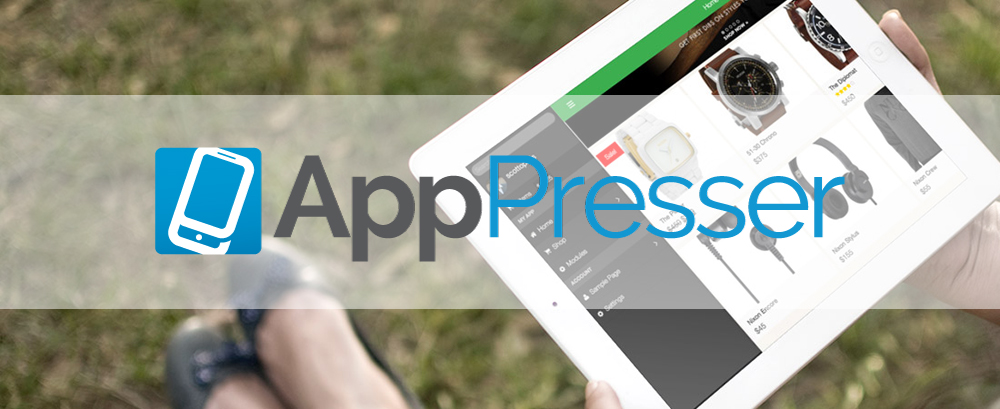
apppresserAppPresser is a foundation for people to use WordPress based tools to build mobile apps for the iOS and Android platforms.

AppPresser is a collaborative effort between Scott Bolinger, Brad Williams, Brian Messenlehner, and Lisa Sabin-Wilson. You may notice that Brad, Brian, and Lisa are partners of WebDevStudios, but AppPresser is a separate entity from WebDev.

I talked to Scott and Brad about AppPresser to find out how people can use it, and to see how they envision this product (or service?) maturing.

Essentially, AppPresser is a suite of tools for use in WordPress by WordPress developers. So, if you have a website, but you want a mobile app, you can use AppPresser to act as a wrapper of WordPress and use WordPress to build your app. AppPresser has the other parts available to make the WordPress-based app fit the iOS and Android app stores.

Is this just a wrapper for websites?

We’ve seen simple website wrappers before, and so have the folks behind AppPresser. They are adament that AppPresser is more than a simple wrapper for a regular website.

We’ve checked out all of the plugins that “make your site an app” but they all really just wrap an existing site and submit it to the app store.

-Scott Bolinger

They even note that the iOS store in particular doesn’t like apps like that and typically rejects them. AppPresser is designed to allow WordPress developers to take advantage of device technologies that aren’t available for most websites.

Some sample things AppPresser helps with are integrating with the device camera, geolocation tools, and phone contacts. So, for the camera, AppPresser could have a shortcode available to WordPress developers that lets a developer use a shortcode, just like they’re familiar with in WordPress, and tap into the camera upload feature for iOS and Android devices.

Structuring an app

AppPresser at a base level is a plugin, and they use device detection within the plugin to identify that a visitor is coming from an app on a device. Someone could have AppPresser enabled on their main website, or it could be hosted on a subdomain or something separate. But for something like an eCommerce catalog it would likely be the same site as to not have problems syncing content.

Enabling AppPresser and using device detection doesn’t mean the site won’t work as expected on regular Safari or Chrome browsers in devices. AppPresser instead switches out the theme, similar to a plugin like WP Touch, only from the app view, and the app functionality and theme would only be applied when such a setup is detected.

Read more

Interview the interviewer: Matt Medeiros of Matt Report

matt-medeirosMatt Medeiros is a WordPress entrepreneur and podcaster from a town between Providence, Rhode Island and Boston, Massachusetts. Matt is also a co-founder of Slocum Studios, a web consultancy. One of Matt’s podcasts is the Matt Report, where he interviews WordPress professionals and digs deep into their stories, their businesses, their successes and their struggles.

It’s one of my favorite podcasts, and I really wanted to learn about Matt the way he learns about his guests each episode. So I asked him if we could do a reverse version of the Matt Report, where I could get his story, and he agreed.

This is my first run at an audio post, and I hope you listen to the entire conversation, but I’ll also highlight parts of our conversation.

Or directly download the .mp3 

Read more

Brace yourselves, WordSesh 2 is coming

wordsesh-macbookThe second ever WordSesh, 24 hours of live streaming WordPress presentations, is coming soon. The first WordSesh was a crazy idea that was wildly successful. I love stuff like that. Scott Basgaard is the lead organizer, and he’s announced the second WordSesh is going to be December 7th.

If you’d like to get a glimpse of last year’s event, the entire thing is available on Youtube or you can check out the archived site. I had the privilege of talking plugins with Pippin Williamson last time, and I look forward to being involved again.

The first WordSesh was a huge success. I talked to Scott about statistics and his goals for the event, and he told me that there were thousands of visitors from all over the world in last year’s live presentations:

To be honest, I didn’t expect WordSesh to be so successful. The streamed presentations had over 2,500 unique viewers from 80 different countries and still continued to be viewed on YouTube today. It just re-enforced the idea that the WordPress community doesn’t have to go far, leave their desk at work or home and even change out of the pajamas to have a good time and grow together. And I hope WordSesh 2 (3,4,5,6,…) can do just that again and again.

On average, WordSesh sessions have received over 300 views each since the event. That’s probably more people than most of us could ever present to at a single WordCamp. The most popular talk last year was from John James Jacoby on bbPress and BuddyPress, and has received over 1,000 views.

Read more

our sponsors

Hosting.com logo
Omnisend
Kinsta
Progress Planner
Elementor
WP Munich
Atarim
Patchstack

Looking for our logo?

You're in the right spot!

Check out our Logo & Style page.