Brian Krogsgard

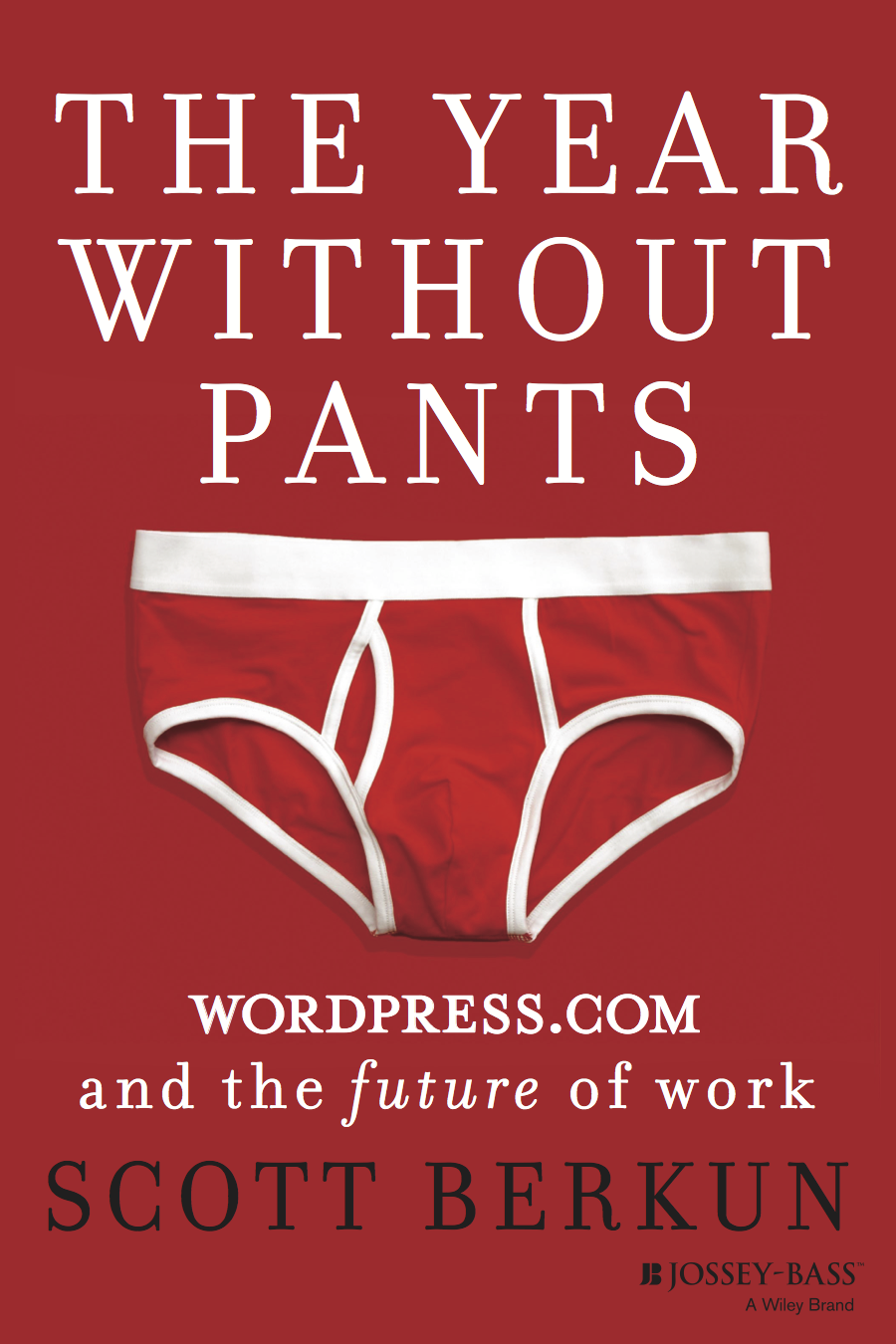
The Year Without Pants

Scott Berkun’s The Year Without Pants is a first person narrative of his time employed at Automattic from August 2010 to May 2012. Berkun entered Automattic as employee number fifty six when the company was replacing its totally flat structure with a team-based one.

Berkun’s story centers around his experience managing Team Social, which was responsible for the creation of Jetpack, amongst other projects. His original team members on Social are key characters throughout the book: Mike Adams, Beau Lebens, and Andy Peatling. In addition to these three, many other Automatticians were highlighted, and various employee personality types were profiled in varying degrees. But the main character in The Year Without Pants, other than Berkun himself, is Matt Mullenweg.

Though Mullenweg doesn’t take a key role in many of the stories told, Berkun spends a good deal of time analyzing Mullenweg’s leadership style, along with CEO Toni Schneider’s, and especially how their styles transcend throughout the rest of the company.

A book of stories

Before you think that this book cannot be applicable to anyone outside the WordPress bubble, think again. My favorite part of Berkun’s book was that it didn’t feel like a lecture or a mandate for managerial behavior. It felt like a story. And throughout the story, lessons could be abstracted, sometimes directly but more often tangentially, so that the reader can develop their own lessons based on the story and circumstances at hand.
Read more

WP Weekend Phoenix to merge back into WordCamp Phoenix

phoenix-event

It’s been confirmed that WP Weekend Phoenix is merging back into an official WordCamp as WordCamp Phoenix.

I first heard about the announcement on Twitter and confirmed with Andrea Middleton today.

As you may recall, I posted about WP Weekend Phoenix in late July. At the time, the WP Weekend Phoenix website noted three things to differentiate them from a traditional WordCamp: opportunities for sponsor partners, speaker diversity, and the scope of the event.

About a month later, Andrea Middleton posted on the Make WordPress Events blog with a draft of guidelines for event organizers planning non-WordCamps, though it wasn’t specific to WP Weekend Phoenix. The post sparked a great deal of conversation in the comments and offline.

And now, it’s been announced that WP Weekend Phoenix is going to be a WordCamp again, so naturally I was curious what caused the switch.

How two events became one again

In essence, it appears that the WP Weekend Phoenix organization came about due to a series of miscommunication, misunderstandings between former WordCamp organizers and WordCamp Central, as well as a desire for more clarity on a specific number of WordCamp guidelines.

A while after finding out about WP Weekend Phoenix, Andrea Middleton spoke to the organizers to see what the specific issues were that caused them to want to start a new event. After a few conversations with April Holle, the primary organizer, the two parties were able to resolve most of the issues as well as gain more clarity on existing guidelines.

Read more

The collision of journalism and digital technology

riptideRiptide is “an oral history of the epic collision between journalism and digital technology, from 1980 to the present.” It is a collaborative project of interviews and an essay between Joan Shorenstein Center on the Press, Politics and Public Policy and the Nieman Journalism Lab.

In Riptide, John Huey, Martin Nisenholtz, and Paul Sagan interview sixty one influential people “who played important roles in the intersection of media and technology — from CEOs to coders, journalists to disruptors.”

WordPress is a key, yet admittedly underlying, piece of the puzzle that has so drastically changed journalism and publishing. Among the incredibly impressive list of new and old media titans interviewed are influential bloggers who publish on WordPress, such as Om Malik and Andrew Sullivan; and most notably WordPress’ co-founder, Matt Mullenweg.

The interviews in general are casual and unscripted. The one with Matt Mullenweg has a couple of highlights that interested me. For one, this is the most detail I’ve seen from Matt to describe his early days developing WordPress alongside his working for CNET. Also, I enjoyed hearing Matt’s take on the effect of modern social platforms on blogging, especially in regard to how he talks about his vision for WordPress.com’s Reader project and his hints of the future importance for that project.

Here’s the entire video:

Read more

our sponsors

Hosting.com logo
Omnisend
Kinsta
Progress Planner
Elementor
WP Munich
Atarim
Patchstack

Looking for our logo?

You're in the right spot!

Check out our Logo & Style page.